Container shipping faces a potential supply surplus as a large newbuilding programme coincides with the prospect of shorter voyages through the Red Sea and Suez Canal, according to commentary published by Splash 247. Dr Raymon Krishnan, president of Singapore’s Logistics & Supply Chain Management Society, warned that the combination could leave vessel capacity as much as 10% above demand.
Citing Drewry’s third-quarter 2026 Container Forecaster, the article put the global containership orderbook at about 13.9m teu on 1 September 2026, representing 40.9% of the operating fleet. Drewry projects fleet expansion of 8.4% in 2027, followed by 12.1% in 2028 and 9.4% in 2029. Those deliveries would arrive in a market where voyage lengths and the amount of tonnage needed to carry cargo could change.
Pandemic-era congestion, equipment shortages and disrupted routes absorbed shipping capacity, while diversions via the Cape of Good Hope subsequently kept vessels at sea for longer. Krishnan argued that a progressive return to Red Sea and Suez routings could free up substantial effective capacity even before new ships are delivered. Orders placed in anticipation of continued trade growth therefore risk entering service under less favourable conditions.
Possible consequences identified in the commentary include weaker freight rates, increased competition for cargo, cancelled sailings, slower operating speeds, lay-ups and earlier recycling of ageing vessels. Smaller ships displaced from major routes could shift into regional services, extending competitive pressure. Ports could also face changing berth needs and transhipment patterns, while shippers might gain cheaper transport but lose predictability as carriers adjust services and port calls.
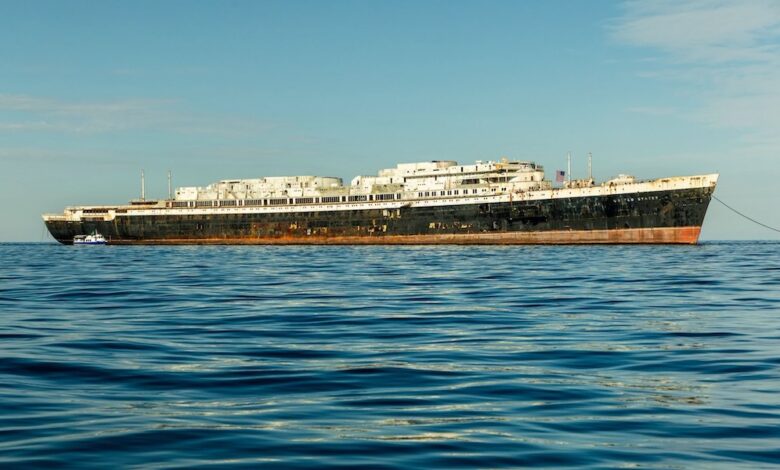
Krishnan framed the warning around the deliberate sinking of the 990-foot SS United States off Destin, Florida, for an artificial reef project. The liner entered service in 1952 but was withdrawn in 1969 after aviation reshaped transatlantic passenger transport. Unlike that market, container shipping remains fundamental to trade, he noted; new ships are not inherently redundant. Nevertheless, improved fuel efficiency does not ensure adequate returns. Recycling is expected to remain the main final destination for surplus containerships once commercially viable redeployment options are exhausted.