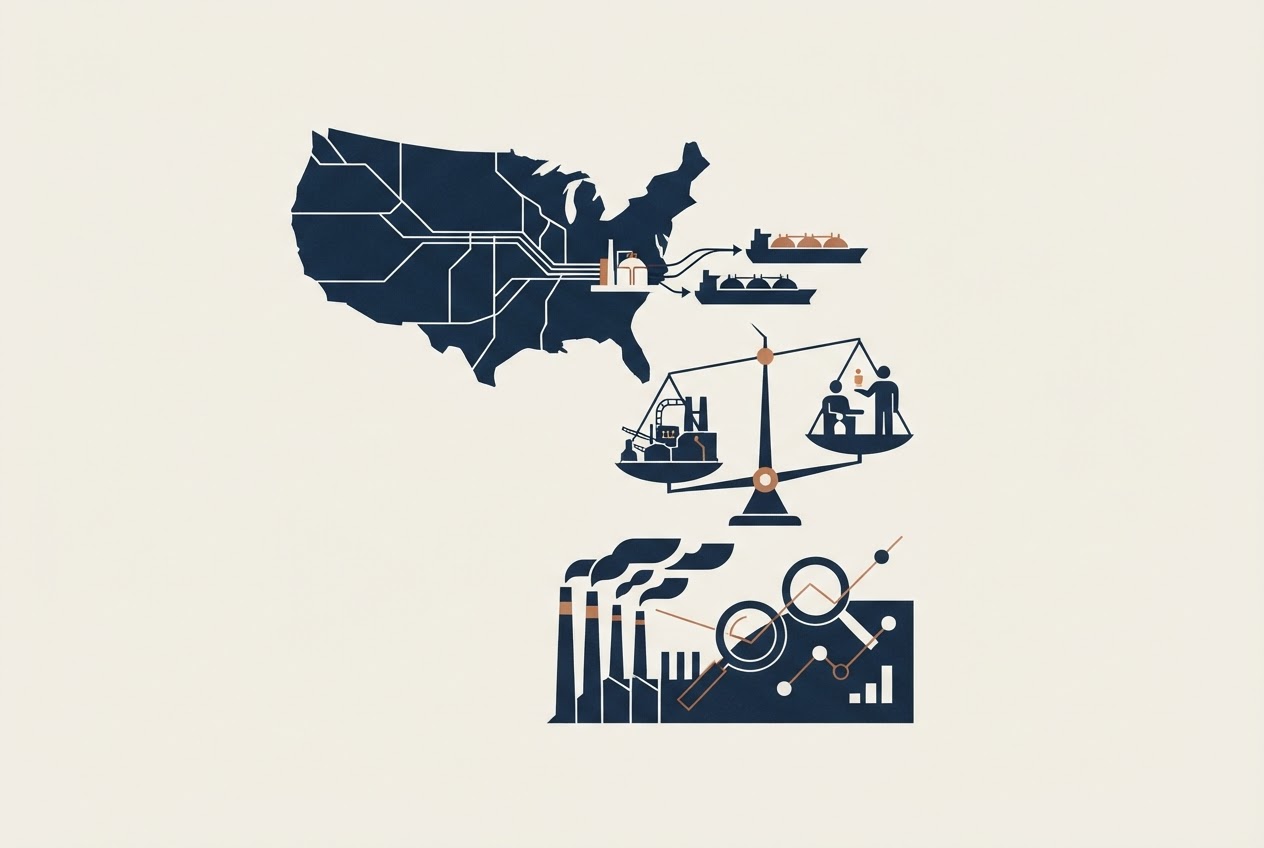
US LNG export assessments should account for stronger domestic supply responses, infrastructure constraints and energy security alongside environmental effects, according to a Gas Expert Insights commentary published by Natural Gas World. The analysis argues that economic gains from exports and their emissions consequences require distinct approaches, with environmental outcomes particularly sensitive to assumptions about supply sources and destination markets.
Citing a 2023 Baker Institute study, the commentary says studies commissioned by the US Department of Energy since 2012 have consistently identified net gains from LNG trade across a broad range of scenarios. Those benefits increased with resource availability. The analysis argues that obstacles to infrastructure development consequently diminish the potential gains available to the US from exports.
The commentary also contends that studies conducted before 2024 underestimated how readily US gas production would respond to prices, with actual output exceeding expectations even in high-resource scenarios. However, it stresses that these assessments examine long-term structural effects rather than short-term price movements. Capacity limitations can create near-term volatility, while persistent constraints can encourage investment. Gas produced alongside oil also needs greater attention because it supports supply and links gas availability to oil-focused upstream activity.
Export approval alone does not ensure a project will proceed, the analysis adds: returns must justify investment throughout the supply chain. It points to more than 45 LNG import terminals that received import licences in the early 2000s but were not developed because market conditions did not support them. An export licence similarly provides an opportunity rather than a commitment to ship cargoes.
On emissions, the commentary advocates separate assessments for individual terminals because supply sources and routes to liquefaction differ. Overseas impacts are harder to predict because US LNG sold free on board can be redirected towards higher-priced markets. Uncertainty over destinations, competing fuels and regional policies makes environmental estimates more complex than calculations of trade benefits.
The analysis further argues that any broader public-interest review should include energy security. It cites the flexibility of US LNG deliveries in responding to European market signals after Russia’s invasion of Ukraine and supply disruption, helping limit economic damage. The piece represents contributor analysis rather than the views of Natural Gas World’s publisher or editors.