South Korea and the US have selected a $22.3 billion gas-fired power development in Texas as the first project under Seoul’s $350 billion investment pledge, according to a Bloomberg report published by gCaptain. An Alaska LNG pipeline proposal remains under review, alongside a separate plan to construct up to eight nuclear reactors.
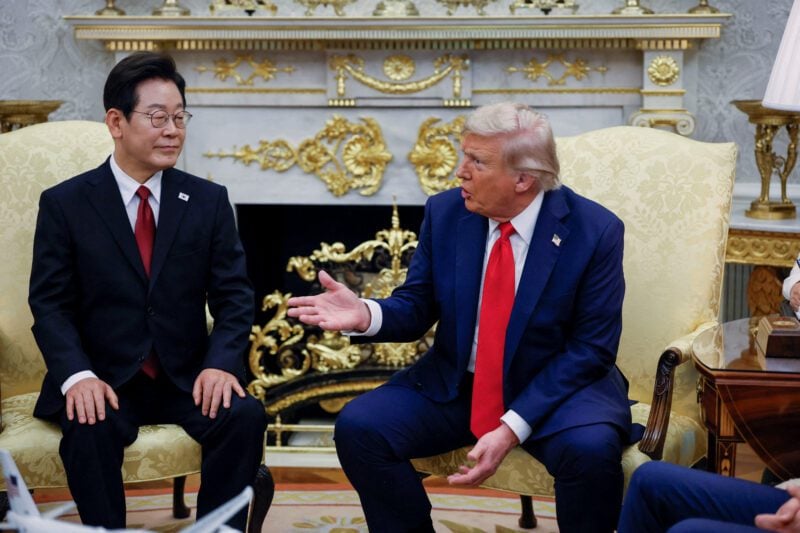
US President Donald Trump and South Korean President Lee Jae Myung welcomed advances in investment discussions during a meeting at the United Nations General Assembly in New York. South Korean National Security Advisor Wi Sung-lac said the talks lasted about 30 minutes. The investment agreement was reached nearly a year earlier to avert steep US tariffs, but choosing projects had proved difficult, with Seoul requiring them to be commercially viable.
The Texas development would involve building and operating a gas-fired power plant in Encinal, with its first phase scheduled to enter commercial service in 2029. South Korean lawmakers briefed privately by the Ministry of Trade, Industry and Resources identified it as the first selected project. One lawmaker said Related Companies, NextEra Energy and Lewis Energy Group would participate. The lawmakers requested anonymity because the projects had not been formally announced.
The Alaska proposal would transport gas from the state’s North Slope to an LNG export terminal in the south. Both that proposal and the nuclear reactor plan would still need South Korean parliamentary approval and must meet Seoul’s commercial viability requirement. One of the lawmakers said the nuclear proposal was considered more attractive commercially and was nearer to being finalised, although no clear announcement timetable was available.
The broader pledge limits annual investment outflows to $20 billion to protect South Korea’s foreign-currency reserves. Of the $350 billion total, $150 billion is allocated to shipbuilding. South Korea established a shipbuilding cooperation hub in Washington in July to support efforts to revitalise US shipbuilding and challenge China’s maritime dominance. Trump had criticised the slow implementation of the agreement and threatened additional tariffs unless Seoul accelerated its progress.